
Black Rhino vs White Rhino: How to Tell the Difference
The easiest way to tell a black rhino from a white rhino is the lip. A white rhino has a broad, flat, square lip for grazing grass, while a black rhino has a pointed, hooked lip for browsing leaves and shoots. Head position, size, horns and habitat give further clues.
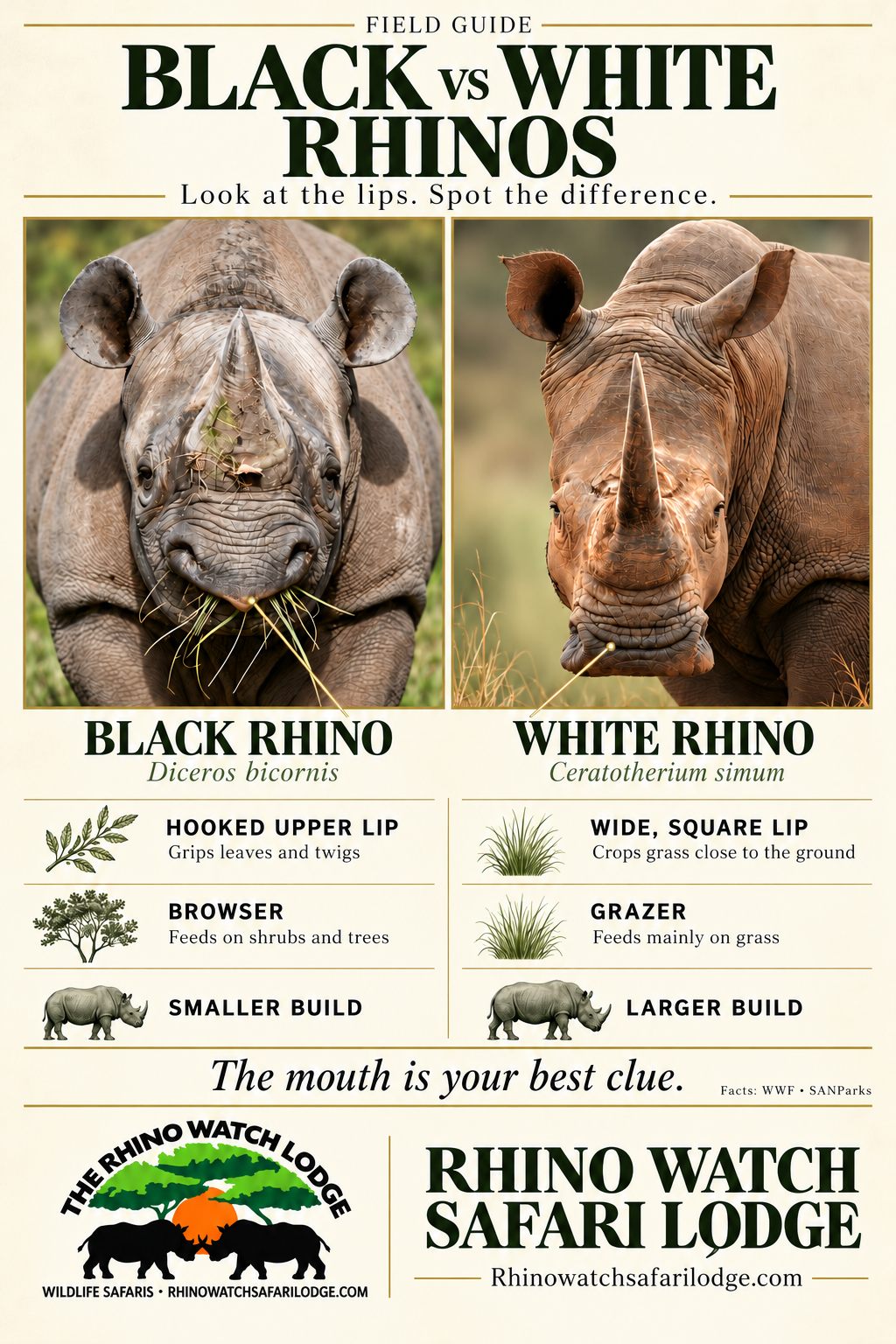
Quick take:
- Lip: white rhinos have a broad, square lip; black rhinos have a hooked, pointed lip
- Diet: white rhinos graze on grass; black rhinos browse on leaves, shoots and branches
- Head: white rhinos usually keep the head low; black rhinos carry it higher, more in line with the body
- Size: white rhinos are the larger of the two
- Habitat: white rhinos favour open grassland; black rhinos favour thicket and dense brush
Look at the Lip
This is the clearest sign, and it follows from what each animal eats. The white rhino’s wide, flat lip works like a mower, suited to cropping grass at ground level. The black rhino’s lip is pointed and prehensile, which lets it grip leaves and pull shoots from shrubs and trees.
Notice the Head Position
Because a white rhino grazes, its head is usually low, close to the ground. A black rhino feeds off bushes and trees, so it carries its head higher, more in line with its body. If you can only see the animal from a distance, head position is often the first thing you notice.
Compare the Size and the Horns
The white rhino is the larger and heavier animal, while the black rhino is smaller and more compact. The horns help too. White rhinos tend to have a much longer front horn than second horn, while a black rhino’s two horns are closer in length.
Where Each Rhino Lives

White rhinos are typically found in grassland and more open areas. Black rhinos are typically found in thickets and dense brush, which also makes them harder to see.
That habitat difference is useful in the central Kenya highlands, which offer very different landscapes within reach of each other. Solio Game Reserve is a rhino sanctuary near us, and Aberdare National Park is a mountain park of forest, bamboo and moorland where black rhino are among the recorded mammals. Thick forest is exactly the sort of country a browsing rhino suits.
For a wider look at where to see rhinos, read our guide to the best places to see rhinos in the wild.
Quick Reference Table
| Feature | White rhino | Black rhino |
|---|---|---|
| Lip | Broad, flat, square | Pointed, hooked |
| Diet | Grazer (grass) | Browser (leaves, shoots, branches) |
| Head | Usually low | Carried higher |
| Size | Larger | Smaller, more compact |
| Horns | Much longer front horn | Two horns closer in length |
| Habitat | Open grassland | Thicket and dense brush |
If you would like to see the central highlands for yourself, you can check availability at Rhino Watch Safari Lodge.
Frequently Asked Questions
What is the main difference between a black rhino and a white rhino?
The lip. A white rhino has a broad, flat, square lip for grazing grass, while a black rhino has a pointed, hooked lip for browsing leaves and shoots.
Which rhino is bigger, black or white?
The white rhino is larger. The black rhino is smaller and more compact.
Do black and white rhinos eat the same food?
No. White rhinos are grazers that eat grass, while black rhinos are browsers that eat leaves, shoots and branches from shrubs and trees.
Where do black rhinos and white rhinos live?
White rhinos are typically found in grassland and open areas, while black rhinos are typically found in thickets and dense brush.
